When learning is built around decisions, trade-offs, and consequences, people don’t just absorb concepts—they test them, misuse them, correct them, and remember them.
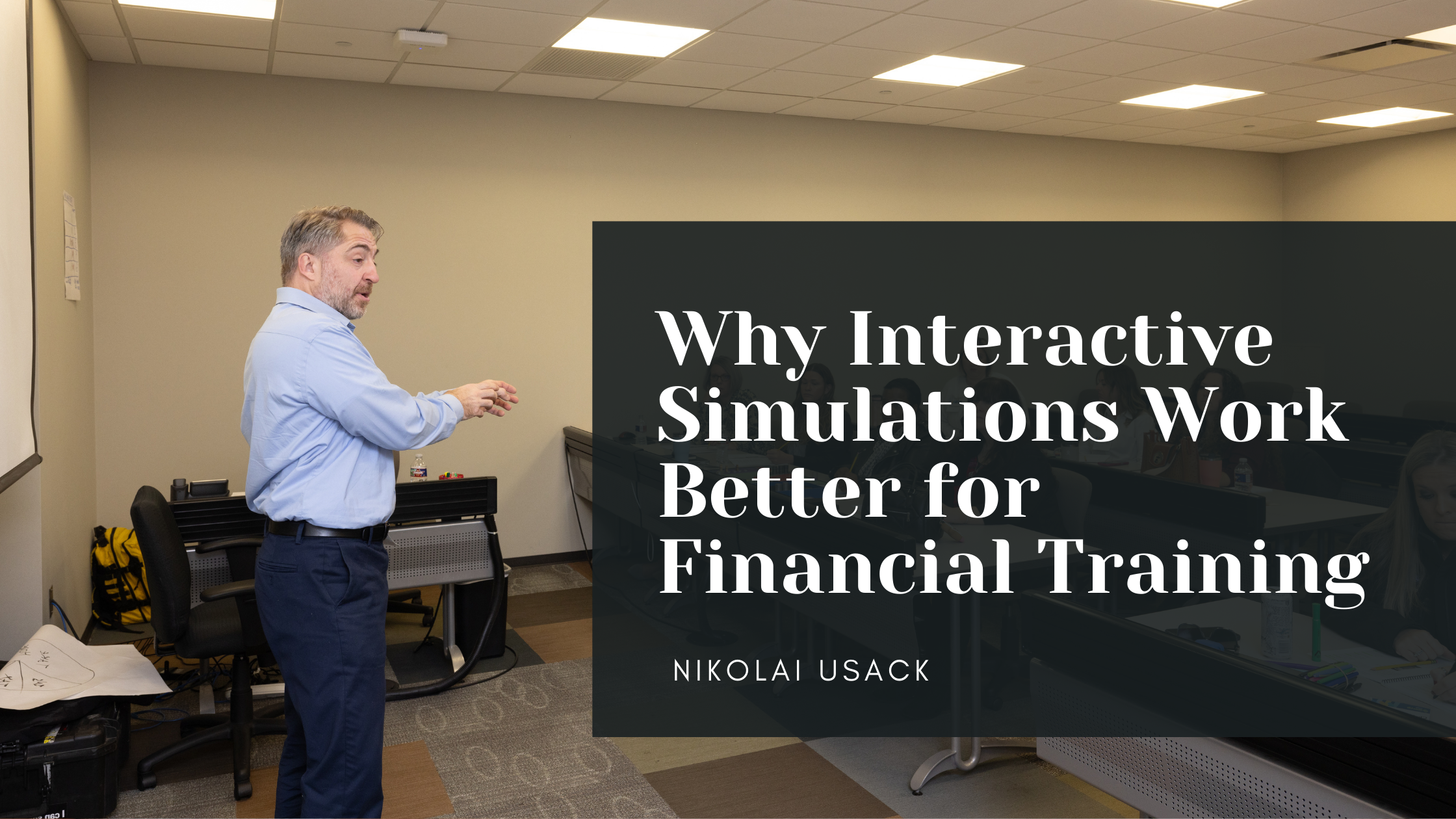
Nikolai Usack answers three frequently asked questions about Income|Outcome’s unique approach to financial training. Learn how the simulation-based methodology enhances business acumen, engages participants, and delivers lasting insights into financial decision-making.
Companies don't operate in isolation. Instead, they operate in fields with three to twenty competitors. And any slight, unexpected occurrence can cause a…
Bemus Landscape experiences greater company-wide communication and holistic business understanding after completing an Income|Outcome Business Simulation.
AI can deliver highly accurate answers to poorly framed questions, making business acumen—the ability to understand how decisions connect to revenue, cost, risk, and long-term consequences—more critical than ever for ensuring organizations ask the right questions in the first place.
Every employee contributes to a company’s financial health—whether they realize it or not. Zingerman’s 10 rules for engaging employees in finance align with Income|Outcome’s philosophy: business acumen should extend beyond leadership. From understanding financial reports to differentiating profit from cash, this post highlights four key financial concepts every employee should know.
Gamification has become a fixture in workplace learning—from onboarding portals to compliance refreshers and sales challenges. Yet beneath the buzz, the research shows a more complex picture.
Discover the key dos and don’ts of business simulations to ensure a smooth, effective learning experience.
Use our simulation selection checklist to ensure your chosen program meets all your learning and business objectives.
A final recap of how to choose the right business simulation. Use these principles to find a training solution that drives long-term impact.
Learn how to measure the impact of your business simulation to prove its value and justify future training investment.
Build business thinking first. Use AI after foundational acumen to extend practice, vary scenarios, and give feedback—without replacing human judgment.
Learn how matching your business acumen simulation to your industry boosts learner engagement and real-world application.
Discover why scalable business simulations are essential for consistent, long-term training success across your growing organization.
Business acumen simulations should prompte lifelong learning, extend value beyond the workshop, and drive lasting skill development.
Discover why full financial statements in business simulations boost literacy, confidence, and informed decision-making.
Whole business thinking in simulations promotes collaboration, breaks down silos, and improves strategic decision-making.
Learn how broad brush strokes in simulations help participants focus on strategy and big-picture thinking without overwhelming detail.
Discover why transparency in business simulations builds trust, enhances learning, and strengthens decision-making skills.
A good business acumen simulation should reflect the real drivers your audience faces. Learn how to spot simulations that align with your learners' decisions and responsibilities.
A good business simulation accounts for more than learning types—it also engages different player types. Discover how to balance competition, collaboration, achievement, and exploration.
Business simulations should address all learning styles—auditory, visual, textual, and kinesthetic. Learn how integrated design boosts engagement and understanding.
Learn why open decision-making in business simulations creates stronger engagement, fosters accountability, and improves learning outcomes.
Learn the key factors that make a business acumen simulation effective, ensuring lasting skills and measurable results.